
This post contains affiliate links. As an Amazon Associate, I earn from qualifying purchases. This means I may earn a commission if you click through and make a purchase, at no extra cost to you. Here’s how it works.
Children with autism can experience the world around them in different ways. Sounds, lights, movement, textures, crowds, transitions, and everyday activities may sometimes feel overwhelming, while other children may actively seek movement, pressure, or particular sensory experiences. Because every child is different, supportive equipment can be an important part of creating an environment where a child feels comfortable, secure, engaged, and able to participate in daily activities.
It is important to remember that autism itself does not mean a child always needs to be “calmed.” Rather, some autistic children may experience sensory overload, difficulty with transitions, challenges with body awareness, or a strong need for movement. Supportive equipment can give them appropriate ways to meet those needs. The goal should be to support the child’s comfort, communication, independence, participation, and safety—not to force a child to behave in a particular way.
Supportive equipment can range from sensory seating and movement equipment to quiet spaces, therapy balls, and safety equipment. Some products provide movement and vestibular input, some create a low-stimulation environment, some support balance and motor development, and others are intended primarily for safety when a child has a tendency to wander or move away unexpectedly.
In this article, we will look at four different types of supportive equipment: the Zhenx Spinning Chair for Autistic Kids, a safety walking harness for big kids with special needs, a pop-up sensory tent, and the Meex Sensory Peanut Ball. Each serves a different purpose, so understanding the differences is important before making a purchase.
Why Is Supportive Equipment Important for Kids with Autism?
There is no single piece of equipment that works for every autistic child. Autism is a spectrum, and sensory preferences can vary considerably from one child to another. One child may find gentle movement enjoyable and organizing, while another may dislike spinning. One child may seek a quiet enclosed space when overwhelmed, while another may prefer to remain in an open area with familiar people.
This is why supportive equipment should be viewed as an individualized resource rather than a treatment or cure. Parents, caregivers, teachers, and therapists can observe what situations tend to make a child uncomfortable and what activities appear to help the child participate more comfortably.
Helping Children Manage Sensory Experiences
Sensory experiences are a major reason families explore supportive equipment. A busy classroom, shopping centre, playground, family gathering, or noisy home can expose a child to many sights and sounds at once. When a child becomes overwhelmed, having access to a familiar supportive tool may provide an opportunity to take a break.
A sensory tent, for example, can create a quieter and visually reduced environment. A movement-based product such as a spinning chair or peanut ball can provide an appropriate activity for a child who enjoys movement.
The important point is that sensory equipment should be matched to the individual child. More sensory stimulation is not automatically better, and a product marketed for autism may not be appropriate for every autistic child.
Supporting Body Awareness and Movement
Some children benefit from activities involving balance, movement, or changes in body position. Equipment such as therapy balls and sensory spinning seats can provide opportunities for movement while also encouraging children to develop coordination and body awareness.
Movement can also make certain everyday activities more engaging. For example, a child who has difficulty sitting still while reading may be more comfortable using an appropriate flexible seating option. Similarly, supervised balance activities can turn physical exercise into an enjoyable sensory experience.
These products should not be considered replacements for professional occupational or physical therapy. Instead, they can complement activities recommended by qualified professionals.
Creating a Predictable Safe Space
A predictable environment can be particularly valuable when a child is experiencing sensory overload. A designated quiet corner at home can communicate that the child has somewhere familiar to go when they need a break.
A sensory tent can be used as a reading area, relaxation space, quiet-play area, or sensory corner. The child can learn that the space is available when they want reduced stimulation.
The space should never be used as punishment. It should be voluntary, comfortable, and easy for the child to leave.
Supporting Safety During Outdoor Activities
Some children with autism may have a tendency to move away from caregivers unexpectedly. This can create significant safety concerns near roads, parking lots, crowded public areas, or bodies of water.
In situations where a caregiver determines that additional physical safety support is appropriate, a specialized walking harness may provide another layer of supervision. It should never replace close adult supervision, and families should carefully follow the manufacturer’s instructions.
Safety equipment should always be selected according to the child’s size and needs and introduced in a respectful, gradual way.
Encouraging Independence
Supportive equipment can also help children become more independent. A child may learn to recognize that they need a quiet break and independently choose their sensory space. Another child may learn to use a therapy ball during an appropriate activity.
When equipment is incorporated into a predictable routine, it can become a tool that supports self-advocacy. The child can communicate, “I need a break,” “I want to move,” or “I need a quiet place.”
That can be much more valuable than simply trying to stop a behaviour.
Four Supportive Equipment Options for Kids with Autism
1. Zhenx Spinning Chair for Autistic Kids
The Zhenx Spinning Chair for Autistic Kids is designed as a movement-oriented sensory seat for children and teenagers. The product is marketed for ages approximately 3–18 and lists a 220-pound capacity. The blue version is intended to provide a spinning or swivelling activity while the child remains seated. Product information describes a sturdy metal base and non-slip rubber feet, along with a 360-degree swivel design.
The main attraction of a spinning chair is movement. Some children actively seek rotational or vestibular experiences, and a controlled movement activity can give them an appropriate way to explore that preference. The chair may also be used during play or as part of a sensory area where movement is incorporated into a child’s routine.

- Sensory Integration in Motion — Build Focus, Balance & Body Awareness. Zhenx 360° swivel chair provides essential vestib…
- Sturdy & Safe Metal Base — 220 lb Capacity & Safety-First Design. Engineered for active sensory seekers. The heavy-duty …
- Premium & Scientific Design — Comfortable, Durable & Easy to Clean. Crafted from high-quality, heat-resistant polypropyl…
Features of the Zhenx Spinning Chair:
- 220-pound stated capacity: The product is advertised with a weight capacity of up to 220 pounds, although caregivers should always check the current manufacturer’s specifications and ensure the chair is suitable for the individual child.
- Sensory Integration in Motion: Build Focus, Balance & Body Awareness. Zhenx 360° swivel chair provides essential vestibular and proprioceptive input. By swinging and rotating, children with ADHD, autism, or sensory needs can improve motor planning, concentration, and self-regulation—all through joyful play.
- 360-degree movement: The swivel design allows the child to rotate while seated. This can provide a movement-based sensory activity for children who enjoy spinning.
- Metal base: Product information describes a sturdy metal base designed to provide stability during use.
- Non-slip feet: The product listing describes non-slip rubber feet intended to help keep the chair stable on the floor.
- Suitable for sensory areas: A spinning chair can potentially become part of a home sensory corner, classroom activity area, or supervised play environment.
- Sturdy & Safe Metal Base: 220 lb Capacity & Safety-First Design. Engineered for active sensory seekers. The heavy-duty metal base supports up to 220 lbs, while non-slip rubber feet ensure secure rotation during vigorous movement. Parents can trust its durable, wobble-free construction, according to manufacturer instructions.
- Premium & Scientific Design: Comfortable, Durable & Easy to Clean. Crafted from high-quality, heat-resistant polypropylene with 360°smooth polishing. Its ergonomic shape offers lasting comfort, and the wipe-clean surface makes maintenance a breeze.
- Enhance Vestibular Processing: Ease Motion Sickness & Boost Coordination. Helps children improve balance through gentle centrifugal motion. Regular use can help reduce sensitivity to movement, alleviating symptoms of car, sea,or air sickness while supporting better coordination.
- Focus and body-awareness activities: The product is marketed around movement, balance, coordination, and focus. These should be viewed as potential uses rather than guaranteed outcomes.
- The Perfect Gift – for Every Child, Including Those on the Spectrum. An ideal birthday, or holiday gift! More than a toy, it’s a practical sensorytool. Perfect for homeschools and calm-down corners. Zhenx sensory integration swivel chair is wonderful for children with autism, supporting calmness and joyful engagement. Let them spin, play, and thrive!
Customer Reviews:
- The Zhenx Spinning Chair for Autistic Kids has received generally positive feedback from customers looking for a sensory-friendly seating option for children and teens. Reviewers commonly describe it as a sturdy swivel seat that provides gentle spinning movement while also giving kids a dedicated place to sit, move, and reset. Parents and caregivers often mention using it during quiet time, homework, play, or moments when a child needs movement to stay engaged. The 220-pound capacity is also viewed as useful because it allows the chair to accommodate a wide age range rather than being limited to very young children.
What Users Like:
- One of the most frequently appreciated features is the spinning motion.
- Many users say that children enjoy being able to control the movement themselves, and some reviewers feel the activity helps make seated activities more engaging.
- Customers also like the chair’s compact design and the fact that it can be used indoors without requiring complicated setup.
- The sturdy construction and balance-focused design receive positive comments as well, particularly from families seeking a sensory product that can provide movement without taking up the space of larger equipment.
- Some parents also appreciate having a sensory option that can be incorporated into everyday routines rather than used only as a specialized activity.
What Users Dislike:
- On the downside, reviewers point out that the spinning feature may not be suitable for every child. Some children may find the movement too stimulating, while others may lose interest after the novelty wears off. A few customers also mention that the chair can take up more floor space than expected and that children need enough surrounding space to use it safely.
- Because sensory preferences vary considerably, the experience can differ from one child to another. Parents and caregivers should also supervise younger children and follow the manufacturer’s age, weight, and usage recommendations.
Final Verdict:
- Overall, the Zhenx Spinning Chair appears to be a useful sensory seating option for families looking for controlled movement, balance practice, and an engaging way to support quiet activities. Its sturdy capacity, swivel design, and broad age range are among its strongest advantages. However, it is not a universal solution, since some children may prefer less movement or different types of sensory input. The final verdict from customer feedback is generally favorable: it can be a worthwhile addition to a sensory-friendly environment when the child’s individual preferences and the chair’s safety guidelines are taken into consideration.
Parents should remember that spinning is not universally calming. For some children it may be enjoyable, while for others it may cause discomfort, dizziness, or overstimulation. Adult supervision is particularly important when introducing movement equipment.
2. 2025 New Safety Walking Harness for Big Kids
The 2025 New Safety Walking Harness is designed for older or bigger children who may require additional support during outdoor walking situations. The product is described as an anti-elopement vest harness for children approximately 6–12 years old with special needs, including autism or ADHD. It includes a grab handle, light reflector, adjustable components, and a leash or tether.
This type of equipment has a very different purpose from the other products in this article. It is not primarily a sensory toy. Its purpose is safety.
For families dealing with a child who unexpectedly moves away from caregivers, additional physical safety equipment can sometimes be useful in environments where there are significant hazards. A harness may provide a caregiver with greater control during walking, especially in crowded areas.
However, a harness should never be treated as a substitute for supervision. It should be fitted correctly, checked before use, and used according to the manufacturer’s instructions. Caregivers should also consider the child’s comfort and ability to communicate discomfort.
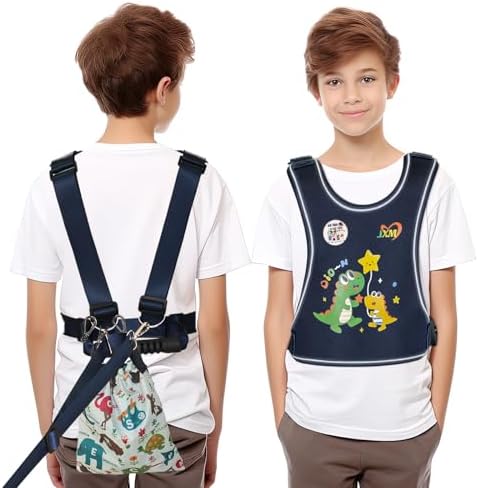
Features of the Safety Walking Harness:
- Designed for bigger children: The product is marketed toward children approximately 6–12 years old.
- COMFORTABLE AND STYLISH DESIGN KIDS LOVE: Every parent knows the difficulty with stiff and rough harnesses. That’s why premium and soft high quality fabric with just the right padding for all-day comfort was chosen. Adorable animal prints generate excitement, turning safety gear into something your child really wants to wear: fewer battles before they go out, more happy little explorers.
- LOCKING BUCKLES, EMERGENCY HANDLE AND AUTISM AWARENESS: Designed for children who may try to roam, the double-sided locking buckles require adult hands to open, helping prevent accidental release. A reinforced rear handle is designed for times of emergency, giving parents quick and safe control in crowds and parking lots. The included autism awareness pin is a separate optional accessory that can be worn when useful and can be removed at any time.
- REFLECTIVE DETAILS FOR NIGHT AND LOW LIGHT SAFETY: Reflective strips improve visibility in low-light environments, such as night walks, parking lots, or quick trips after sunset. They help drivers and cyclists spot your child more easily, offering added peace of mind when you leave later than planned.
- Grow-With-Me Fit: This autism safety harness leash is designed to grow with your child. Adjusts to fit changing chest, height and waist sizes (24.4″-34.64″). The shoulder straps adjust from 15.74″-29.13″ and the rear seat belt extends from 3.2′ to 5.2′ for a secure, comfortable and personalized fit.
- BUILT-IN STORAGE FOR EVERYDAY OUTINGS: A hidden back bag doubles as a compact mini backpack, perfect for snacks, drinks or a small toy. When not in use, the adjustable belt tucks neatly inside, keeping everything organized and hands-free during busy days outside.
- Vest-style design: A vest configuration can distribute contact across the torso rather than relying only on a wrist connection.
- Grab handle: A handle on the back can give a caregiver an additional point of control when necessary.
- Reflective element: The product description includes a light-reflective feature that can increase visibility in lower-light conditions.
- Adjustable fit: Adjustable straps can help accommodate different body sizes.
- Walking tether: The leash component provides a connection between the child and caregiver.
Customer Reviews:
- The 2025 New Safety Walking Harness for Big Kids is designed for families who need an additional layer of support when taking an active child outdoors. Reviewers generally appreciate that it is made for older and bigger children rather than only toddlers, with adjustable straps intended to accommodate growth. The vest-style design, grab handle, reflective details, and leash provide several ways for a caregiver to maintain close supervision during walks, shopping trips, crowded areas, or other situations where staying nearby is especially important.
What Users Like:
- One of the biggest things users like is the combination of adjustability and practical safety features.
- The adjustable chest and shoulder straps can make it easier to achieve a closer fit, while the rear tether gives the child some walking freedom without requiring constant hand-holding.
- The grab handle is also considered useful when a caregiver needs to bring the child closer quickly.
- Reflective elements are another appreciated touch for outdoor use, particularly when visibility is reduced.
- Similar safety-harness reviews commonly highlight secure fitting, ease of use, and giving children a little more independence while remaining supervised.
What Users Dislike:
- The main complaints tend to center around sizing and individual comfort. Because children’s body shapes and sizes vary considerably, some users may find that the harness feels too loose or requires repeated adjustment to get the right fit. Other children may simply dislike wearing a harness at first and need time to become comfortable with it.
- Reviews of comparable products also show that sizing can sometimes be inconsistent and that durability concerns can arise with buckles or leash connections, so caregivers should inspect the harness regularly and follow the manufacturer’s fitting and safety instructions.
Final Verdict:
- Overall, the 2025 New Safety Walking Harness can be a useful option for families looking for an additional supervision tool for an active child who may wander. Its adjustable construction, grab handle, reflective details, and tether make it more versatile than a basic wrist strap. However, the fit should be checked carefully before use, and it should be viewed as a supplemental safety aid rather than a replacement for attentive adult supervision. For families who find the sizing and comfort suitable for their child, it can make everyday outdoor activities feel more manageable and controlled.
The most important consideration is whether this type of equipment is genuinely needed for the child’s safety. Families should consider the environment, the child’s mobility and wandering behaviour, and advice from qualified professionals when appropriate.
3. Lukidoki Sensory Tent for Autistic Children
A sensory tent is designed to provide a designated low-stimulation area where a child can take a break, play quietly, read, or simply spend time away from overwhelming environmental input.
The pop-up sensory tent described in this category is marketed as a calming hideout for children and adults and can be used as part of a sensory room or calming corner. Similar products available in Canada feature blackout materials, portable designs, doors or windows, and quick pop-up setup.
One of the biggest benefits of a sensory tent is that it can change the surrounding environment without requiring the child to leave home or the activity area completely. A tent can reduce visual distractions and create a familiar location for quiet activities.

- 【Premium Blackout Effect with PU-Coated Fabric】 — Crafted from top-quality light-blocking materials, our sensory tent in…
- 【Thoughtful Design with Windows】 — The lukidoki Sensory Tent boasts a user-friendly design featuring mesh windows on bot…
- 【Certified Safety for Your Child】 — Our sensory tent is CPC certified (Children’s Product Certificate), ensuring the hig…
Features of a Sensory Tent:
- Premium Blackout Effect with PU-Coated Fabric: Crafted from top-quality light-blocking materials, this sensory tent incorporates a special blackout PU coating for complete shading. Even when exposed to flashlight or mobile phone light, no light penetrates the surface. Creating a tranquil and dark environment, it effectively soothes children, even in bright daylight or illuminated surroundings.
- Thoughtful Design with Windows: The lukidoki Sensory Tent boasts a user-friendly design featuring mesh windows on both sides. Enhancing air circulation, the mesh windows prevent a stuffy feel during prolonged play. Conveniently designed with Velcro, the window covers can be easily opened or closed.
- Certified Safety for Your Child: This sensory tent is CPC certified (Children’s Product Certificate), ensuring the highest standards of safety. Ideal for children with special needs, the tent offers a secure retreat for those easily overstimulated. Crafted to provide a comforting, dark sanctuary, it aids in managing sensory challenges like SPD, anxiety, autism, and attention-related issues.
- Effortless Setup and Portability: The lukidoki Portable Sensory Tent features a simple pop-up design for quick setup in seconds. Providing a 35.4×35.4×35.4 inches peaceful hiding place, it folds effortlessly into a 15.7-inch diameter storage bag, weighing a mere 2.5 pounds. Compact and easy to carry, it’s perfect for home or classroom use without occupying much space.
- Personalized and Portable Sensory Oasis: The lukidoki sensory corner encourages boundless exploration for children’s imaginations. Whether reading, listening to music, playing, or sleeping, this space is adaptable. Enhance their experience with visual delights like LED lights and projectors, tactile comfort using soft blankets and toys, soothing sounds or white noise from music boxes, and subtle scents through aromatherapy. Let your child explore, play, and relax in a space tailored to their unique preferences.
- Note: The tent frame is made of high-elastic steel. If one side of the frame bends inward or appears depressed when popped out, simply give the tent a few quick shakes to restore it to its normal shape.
- Private calming area: The tent can provide a designated place for quiet time, reading, relaxation, or sensory activities.
- Calming-corner use: A sensory tent can become part of a larger calming area containing familiar books, cushions, sensory toys, or other child-approved items.
Customer Reviews:
- Based on available product feedback, the lukidoki Sensory Tent is generally described as a useful private retreat for children who benefit from a quieter, darker environment. Reviewers highlight the blackout material, pop-up construction, and portable design, with some saying the enclosed space helps create a calmer place to step away from overwhelming surroundings. The manufacturer lists the tent at roughly 35.4 × 35.4 × 35.4 inches (approximately 90 × 90 × 90 cm) and notes mesh windows for ventilation and side pockets for small items.
What Users Like:
- What users tend to like most is the strong light-blocking effect and the fact that the tent can be opened quickly without complicated assembly.
- Some feedback describes it as well made, lightweight, and easy to move between rooms or take along when traveling.
- The mesh windows are another useful feature because they allow airflow while giving the child some control over how enclosed the space feels.
What Users Dislike:
- The main criticism is that folding the tent back down can take some practice. One reviewer specifically mentioned that closing it for storage has a learning curve, while other feedback notes that the pop-up frame can require a little adjustment after opening.
- Parents should also keep in mind that sensory preferences vary considerably, so a blackout tent that works well for one child may not be appealing to another.
Final Verdict:
- Overall, the lukidoki Sensory Tent appears to be a practical option for creating a dedicated quiet corner at home or in another supervised setting. Its combination of darkness, ventilation, portability, and simple setup makes it appealing for children who enjoy having a private space to read, play, or take a break. However, it is best viewed as a comfort and sensory-space product rather than something that will work the same way for every child.
A sensory tent should always have appropriate ventilation and should not be treated as a locked or restricted space. Children should be able to leave easily, and adults should monitor the environment appropriately.
4. Meex Sensory Peanut Ball for Kids Therapy and Exercise
The Meex Sensory Peanut Ball is a therapy and exercise ball with a peanut-shaped design. It is marketed for activities involving balance, coordination, motor skills, physical therapy, flexible seating, and sensory play. Product information describes the peanut shape as providing additional stability compared with a traditional round exercise ball.
The shape is one of its most interesting features. Because the ball is narrower in the centre and wider at the ends, it can provide a different seating and movement experience from a standard yoga ball.
Children can potentially use a peanut ball for supervised balance activities, movement exercises, stretching, or flexible seating. It can also be incorporated into age-appropriate therapy activities.

- 🌟 ENHANCED FOCUS: Our peanut ball physical therapy offers a dedicated space for kids to channel energy positively, enhan…
- 🧡THERAPEUTIC SUPPORT: Our physical therapy ball is beneficial for sensory needs, these exercise ball for kids aids child…
- 🍃QUALITY & DURABILITY: Our peanut therapy ball are much stronger than normal round yoga ball for kids. Our peanut yoga b…
Features of the Meex Sensory Peanut Ball:
- ENHANCED FOCUS: This peanut ball physical therapy offers a dedicated space for kids to channel energy positively, enhancing concentration during activities like TV time or play. These occupational therapy toys for kids are the perfect sensory toys for autistic children encouraging balance and coordination, concentration, motor skills, developmental delays, focus and tactile awareness.
- THERAPEUTIC SUPPORT: This physical therapy ball is beneficial for sensory needs, these exercise ball for kids aids children with issues like Autism, providing support during behavioral sessions and task completion. These physical therapy balls provide a calming experience through tactile sensations, pressure, and movement, creating the perfect retreat for relaxation.
- QUALITY & DURABILITY: This peanut therapy ball are much stronger than normal round yoga ball for kids. The peanut yoga ball is made by child friendly material, anti burst and non-slip hypoallergenic surface. These peanut ball kids are BPA and PHTHALATES FREE! These kids exercise big balls for kids praised for its sturdiness and well-made construction, ensuring durability and making these kids exercise ball a long-lasting investment capable of withstanding vigorous use for your child.
- VERSATILITY: This pediatric physical therapy equipment is highly versatile, employing this exercise balls for kids for sensory activities, exercises, playtime and even as alternative kids balance ball chair. These sensory chair for autistic children can be used as a desk, office chair, to read, study, watch TV, play games. This kids yoga ball chair has a unique shape that accommodates a variety of activities, making it a go-to multi-functional tool in every home.
- PROMOTES PHYSICAL ACTIVITY: This therapy ball for children encourages physical activity in a safe and enjoyable manner, aiding in burning off energy for both children and adults, contributing to overall well-being. These kids gym equipment is the perfect kids workout equipment for your children! These occupational therapy equipment for kids comes with a 30 day promise.
- EASE OF USE AND SETUP: Effortless Setup, Instant Playtime with the sensory balls for autistic children. This kids peanut ball is ready for action with minimal effort. Elevate your playtime convenience and bring this joy to your doorstep through Amazon. This yoga ball comes with a hand pump.
Customer Reviews:
- The Meex Sensory Peanut Ball has generally received positive feedback from parents, caregivers, and people using it for children’s therapy and sensory activities. Reviewers often describe it as sturdy, well made, and enjoyable for children who like movement and bouncing. The peanut-shaped design gives children a different kind of stability compared with a regular exercise ball, while also making it useful for sitting, rolling, bouncing, and simple balance activities. Several reviewers mention that children use it regularly and seem to enjoy incorporating it into their daily routines.
What Users Like:
- What users seem to like most is the versatility and durability.
- Parents report that children enjoy bouncing and rolling on it, while others appreciate being able to use it for balance, coordination, and sensory activities.
- Its relatively large size and sturdy construction are also frequently praised, with some reviewers saying it holds its shape well after repeated use.
- The included hand pump is another convenient feature mentioned by customers, although reports about whether a pump was included have not been completely consistent.
What Users Dislike:
- There are a few things that some users may dislike. The ball is fairly large, so it can take up noticeable floor space when inflated and may not be ideal for smaller rooms. Some children may also need time to get comfortable with the unusual peanut shape and movement.
- One reviewer specifically reported receiving the ball without the expected pump, although other listings and reviews indicate that a pump is normally included. It is also primarily designed for children, so older or larger users may find its size and support less suitable.
Final Verdict:
- Overall, the Meex Sensory Peanut Ball appears to be a useful and enjoyable option for families looking for a versatile movement and sensory activity tool. Its strongest points are its sturdy construction, peanut-shaped design, versatility, and the fact that many children seem to genuinely enjoy using it. It should not be viewed as a replacement for professional therapy, but it can be a practical addition to age-appropriate movement and sensory activities at home. For families who have enough space and want a ball that can support play, balance practice, and flexible seating, customer feedback suggests that it is worth considering.
Like other movement equipment, a therapy ball should be selected according to the child’s size and ability. Children should use it in an appropriate environment and under supervision, particularly when they are first learning to use it.
Which One Should You Buy and for Which Purpose?
Choose the Zhenx Spinning Chair for Movement-Seeking Activities
- The Zhenx Spinning Chair is the most appropriate choice among these four if the primary goal is to provide a supervised movement activity for a child who enjoys spinning and rotational movement. It can be particularly interesting for children who naturally seek movement during play or need an appropriate physical activity between quieter task
- However, spinning should never automatically be assumed to calm an autistic child. Some children may enjoy it, while others may find rotational movement uncomfortable. Parents should observe the child’s response and stop the activity if the child shows signs of distress, dizziness, or discomfort. The product’s stated 220-pound capacity and age range should also be checked against the child’s actual requirements before purchase.
Choose the Safety Walking Harness for Outdoor Safety Needs
- The safety walking harness is the most purpose-specific product on this list. It is intended for families who need an additional safety measure when taking a child outdoors, particularly when unexpected wandering or moving away from a caregiver is a serious concern.
- It is not a sensory toy and should not be purchased simply because a child has autism. The need should be based on the child’s individual safety circumstances. Proper fitting, supervision, comfort, and respectful use are essential. A caregiver should remain attentive even when the harness is being used because the harness is an additional safety tool rather than a replacement for adult supervision.
Choose the Sensory Tent for a Quiet, Low-Stimulation Space
- The sensory tent is the best choice when the main objective is creating a dedicated quiet area. A child who becomes overwhelmed by lights, activity, noise, or visual distractions may appreciate having a familiar location where they can voluntarily take a break.
- It can be especially useful at home, in a classroom, or in another appropriate indoor environment. Parents can make the area more inviting by allowing the child to choose what belongs inside, such as a favourite book, comfortable cushion, or preferred sensory item. Blackout models can significantly reduce light and visual distractions, although ventilation and easy access should always be considered.
Choose the Meex Peanut Ball for Balance, Exercise and Flexible Seating
- The Meex Sensory Peanut Ball is the most suitable option if the family is looking for a product that combines movement, balance activities, physical exercise, and flexible seating. Its peanut shape is designed to provide a stable base for various activities, making it different from a standard round exercise ball.
- It may be particularly useful for children who enjoy movement while participating in seated activities or for families looking for a versatile exercise and sensory tool. Because it involves balance, parents should make sure the ball is used in an appropriate space and that the child is supervised. It can also be a useful complement to activities suggested by an occupational or physical therapist.
How to Choose Supportive Equipment for an Autistic Child
Before purchasing sensory or supportive equipment, parents should think about the child’s actual needs rather than simply looking for products labelled “autism.”
First, consider what the child is seeking or avoiding. Does the child seek movement? Does the child become overwhelmed by bright lights? Does the child need a quiet place? Is the main concern physical balance? Is outdoor safety the priority?
Second, consider age, size, and physical ability. Equipment should be appropriate for the child’s height, weight, developmental abilities, and environment. Manufacturer weight limits should always be followed.
Third, consider the child’s preferences. A product that one child loves may be completely unsuitable for another. Giving the child choices can help turn supportive equipment into something positive rather than something imposed on them.
Fourth, consider safety. Check for stability, construction, ventilation, appropriate fit, and potential hazards. Movement equipment should be used on a suitable surface, while tents should provide adequate ventilation and easy exit.
Finally, consider professional guidance. Occupational therapists, physiotherapists, educators, and other qualified professionals can help families determine whether a particular type of sensory or movement equipment is appropriate.
Supportive Equipment Should Complement, Not Replace, Professional Support
Sensory equipment can be helpful, but it should not be presented as a cure for autism. Autism is not something that a spinning chair, tent, therapy ball, or harness can “fix.”
The purpose of supportive equipment is to help a child participate more comfortably and safely in everyday life. For some children, that may mean having an appropriate movement activity. For others, it may mean having somewhere quiet to take a break. For another child, safety equipment may be necessary during outdoor activities.
Parents should also pay attention to the child’s communication. If a child indicates that a particular product is uncomfortable or unwanted, that response matters. Support should be based on respect, safety, and individual needs.
Conclusion
Supportive equipment can make a meaningful difference in creating a child-friendly environment for some autistic children, particularly when the equipment is carefully matched to the child’s individual sensory, physical, communication, and safety needs.
The Zhenx Spinning Chair is primarily a movement-based option for children who enjoy supervised spinning. The Safety Walking Harness has a specific outdoor safety purpose for children who may unexpectedly move away from caregivers. The Sensory Tent provides a dedicated low-stimulation space where a child can voluntarily take a break. The Meex Sensory Peanut Ball combines balance, movement, exercise, and flexible seating possibilities.
There is no universally “best” piece of supportive equipment for autism. The best product is the one that addresses the child’s actual needs while respecting their comfort and preferences. Before buying, consider the child’s age, size, abilities, sensory preferences, and safety requirements. When appropriate, professional guidance can also help parents choose and use equipment effectively.
Most importantly, supportive equipment should be viewed as a way to give children more opportunities for comfort, participation, movement, independence, and safety. A thoughtful approach can transform these products from simple pieces of equipment into useful parts of a supportive everyday environment.